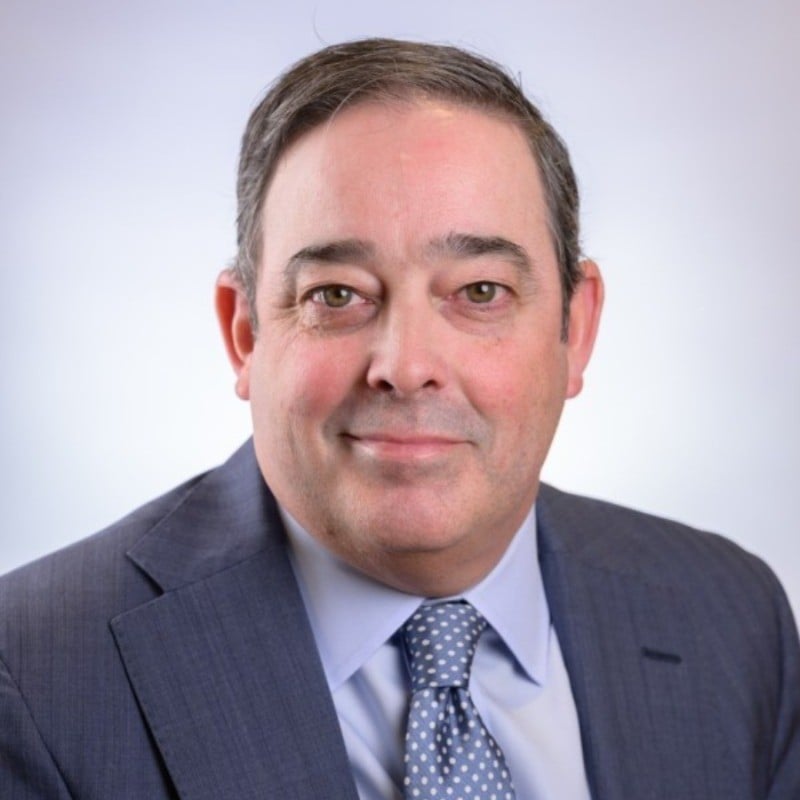
Photo courtesy of Metro Credit Union
Steven Finocchio
Chief Financial Officer, Metro Credit Union
Industry experience: 34 years
Age: 57
After years of working for large banks, Steven Finocchio is switching teams to join Metro Credit Union. The Chelsea-based, $3.3 billion-asset lender’s new chief financial officer departed HarborOne after its acquisition by Eastern Bank last year. Before that, Finocchio held senior treasury and planning leadership roles at Berkshire Bank and spent 20 years at State Street.
At Metro, Finocchio will oversee the credit union’s finances and balance sheet strategy. Finocchio says he’s excited to get to work at a community institution. He joins the credit union as the economy is facing volatility, but says he feels he will be able to take a longer-term approach with the strategy he plans to deploy at Metro.
Q: When it comes to community institutions, whether it’s on the banking side or the credit union side, there is that constant threat of consolidation. How can local institutions continue to survive in an environment like this?
A: The cost of running the institution is going up all the time, and that has been the challenge and one of the key drivers of consolidation. That’s all well-known. The difference on the credit union side – you obviously have to be successful and think about the long-term value that you’re providing to the members – we still have branches. We’re not actively trying to get rid of branches like other places might be in the space, and we want to be a part of that community, through not just the branch. I think the focus on trying to achieve the consumer’s goal is another answer. I think a lot of the banks, even of HarborOne’s size and larger, are increasingly driven by the commercial side of the business, whereas the Metro credit Unions and other credit unions are continually focused on the consumer and the community. I think that’s their staying power. That’s what’s going to keep them relevant over the longer term.
Q: Is there a different approach or a different kind of strategy that you can take at a credit union compared to a local bank, or publicly traded banks?
A: Certainly, you have a longer-term view than even a public, smaller bank. When I was a CFO at HarborOne, you still had to focus on the quarterly numbers. I think credit unions can think about the long-term interest of the membership a lot more readily than a public bank can. Obviously mutuals have the same approach as credit unions, in that both don’t have to focus on the very short term but at the end of the day, you need to be successful.
I was in treasury at State Street for the last seven years that I was there, and understanding the challenges of the balance sheet and the challenges of the interest rate environment continue to be critical. One of the things that I bring here – and I think credit unions need to stay focused on it as well as smaller community banks – is how to how to manage prudently through the tumbles of the market, and being able to be responsive to that. I think that’s one of the bigger challenges.
Also the opportunities for the smaller banks is that you don’t have that short-term motive, but you still need to be successful, and you still need to think about – maybe you don’t call it profitability in the bottom line, but it’s more about the overall success and the strength of the balance sheet. At the end of the day, you’re giving that back to the membership, and that is benefiting the membership over the longer term. That stewardship is still extremely important, even though you don’t have to report out publicly to shareholders every single quarter.
Q: How does the volatile state of the economy or uncertainty in general affect overall strategy?
A: There has been volatility for quite a long time. At this point, the market never seems to really calm down anymore. It’s really just the nature of culture and the way social media operates and everything else that the market just moves much more quickly. It’s more about having a long-term adaptation to the ups and downs of the market and trying to just maintain a steady course through that. One of my main things, I like to call myself a steward of the capital markets and interest rate markets for the last 30 years. My job is to find a steady course through rate volatility or market volatility or geopolitical risk and think about the long term. Yeah, you will increase your liquidity a little bit here and there, and be a little bit more conservative on occasion, but at the end of the day, as a consumer-focused credit union, we still need to make mortgages. We still need to make auto loans. We still need to do those things that the customer or the member needs. Our job is to offset that on the balance sheet through a balance sheet strategy.
Q: Whether it’s Metro, or credit unions in general, how can they go above and beyond in terms of being involved in a community?
A: It’s the culture of the organization. We talk about it every day. We talk about how we’re in the community and really driving it through every employee. So, whether you work in a branch or you work in the back office, having that connection to the community is paramount. I don’t want to disparage State Street or anything. They were great when they were there, but they didn’t have the personal touch. Most of their clients were national, international, and the only thing they could really do was write a check. I don’t want to disparage them, they’re a great institution. Whereas here, you live and breathe it. We have a financial literacy program. It’s not just the people in the branch that are trying to make ourselves available to the members, to really help them holistically, as opposed to just doing what you do in the branch. I think that’s really where the rubber meets the road in trying to bring the membership along their life journey, which is really different than the larger institutions, who are literally just trying to find the products that the customer wants at any given moment, as opposed to really thinking about the whole life cycle of a family unit.
Finocchio’s Five Favorite Restaurants
- Regina Pizzeria, in Boston’s North End
- Acquitaine, in Chestnut Hill
- Gene’s Chinese Flatbread Cafe, in Boston’s Financial District
- Grille 23, in Boston’s Back Bay
- Balthezar, in New York City’s SoHo