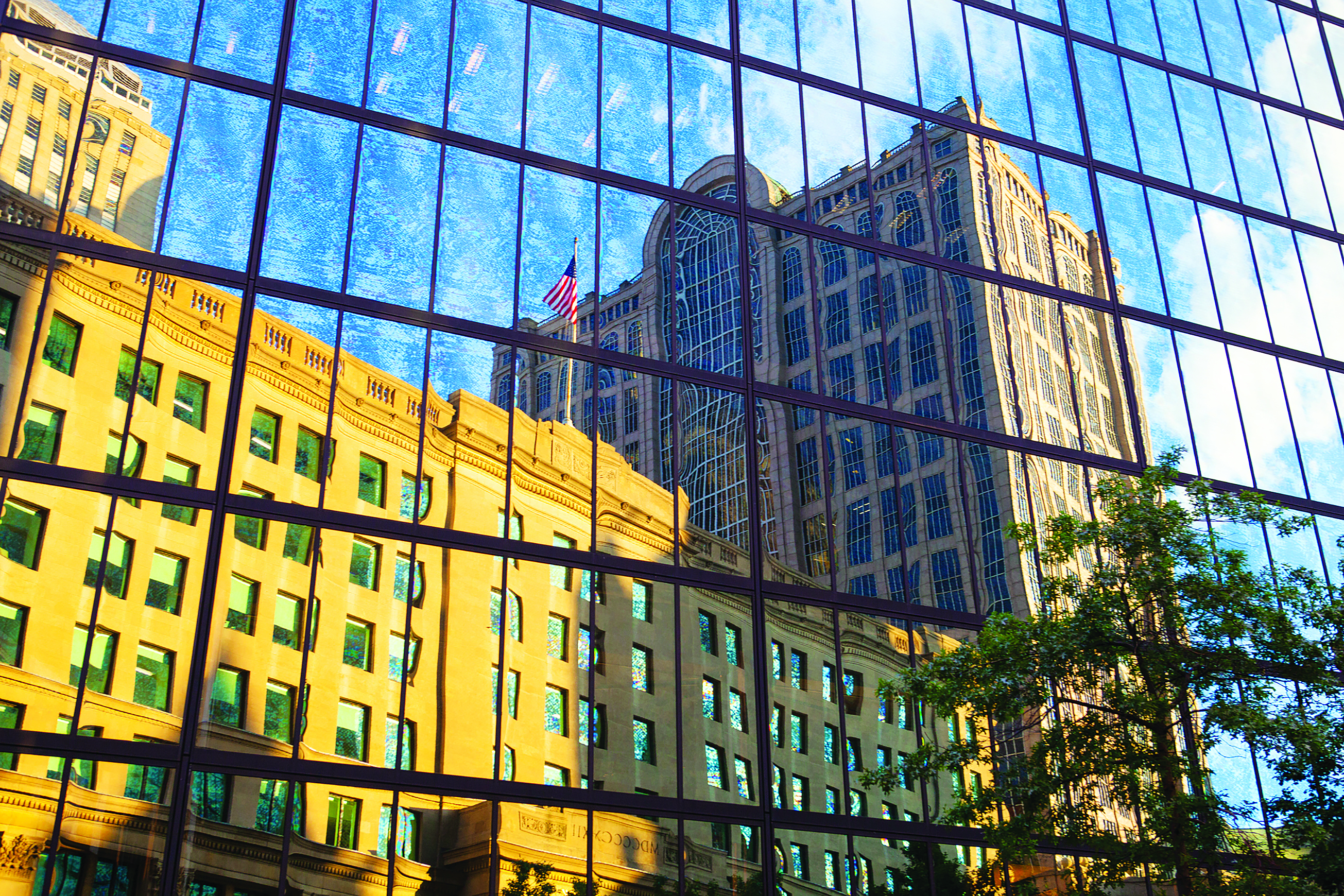
Despite ongoing opposition from investment firm BXP, owner of some of Back Bay’s most iconic real estate, a campaign to establish a business improvement district in the neighborhood is nearing victory. iStock photo
The Back Bay Association’s three-year campaign to establish the neighborhood’s first business improvement district is nearing the finish line, despite opposition from a major landlord that owns some of the neighborhood’s most notable real estate.
The goal: to prop up the neighborhood’s image as safe, clean and desirable in an era of rising vacancy, and complaints about public safety and declining quality of life.
The neighborhood business group has received informal commitments from landlords exceeding the legal threshold to create a BID, Back Bay Association President and Executive Director Meg Mainzer-Cohen said. Mainzer-Cohen hopes to obtain legal authorization from hundreds of property owners by the end of 2026, the final step in the BID creation.
“We are looking at this as a strategic campaign for the Back Bay, which would benefit from having additional services,” Mainzer-Cohen said. “Our organization has been around for over 100 years and is in an ideal position to know how to best support the businesses and property sectors.”
The proposed district encompasses 550 parcels. Under Massachusetts law, the BID needs signatures from 60 percent of the parcel owners and a majority of the district’s total assessed value.
An informal survey indicates the group has exceeded both thresholds, Mainzer-Cohen said. Both benchmarks are required for a BID formation, along with Boston City Council approval.
BXP Remains Opposed
Owners of properties worth a combined $7.2 billion are now supporting the BID creation, Mainzer-Cohen said.
One notable holdout is BXP, owner of the Prudential Center, 111 Huntington Ave., 200 Clarendon and 888 Boylston office towers, which have combined assessments of approximately $3 billion.
“After careful consideration of our existing community benefit commitments under current Planned Development Districts, as well as extensive review of national BID practices and the proposed BID’s size, structure, and scope we do not feel the proposed BID will meet the Back Bay community’s needs and we are electing not to participate,” BXP Boston Region Executive Vice President Bryan Koop said in a statement this week.
BXP said the BID assessment would place an “undue burden” on property owners in the current real estate climate, alongside declining property values, rising operational costs and rising property taxes.
DivcoWest, which acquired the 399 Boylston St. office building in November, declined to comment. The Druker Co. of Boston, developer of the neighborhood’s newest office project at 350 Boylston St., did not respond to a request for comment.
Tailoring BIDs to Neighborhood Needs
Boston’s Downtown Crossing, Greenway and Newmarket neighborhoods created their own BIDs in recent years, with slightly different goals.
The Greenway BID assumed responsibility for maintenance, public art and event programming. Newmarket businesses sought to improve security and street cleanups in response to rising homelessness and public drug use in the Mass and Cass area. Downtown Crossing businesses sought to attract more foot traffic to the neighborhood, through special events, public art and marketing promotions, amid the post-pandemic decline in office occupancy.
Massachusetts’ economically struggling Gateway Cities have also turned to BIDs to offset declining public funding for economic development. The city of Lowell is in the preliminary stages of a downtown BID formation, seeking to maintain recovery of its retail district following COVID.
Back Bay hasn’t been immune to the office downturn, although it has weathered the hybrid work era better than the Financial District. The Back Bay’s 68 office buildings had a 22 percent availability rate at year’s end, according to CBRE, approximately three times the level before COVID.
The neighborhood’s retail sector is increasingly in flux. Neiman Marcus, one of the anchors of Copley Place, will close this spring during the bankruptcy of its parent, Saks Global. Mall owner Simon Property Group said it plans to convert the 3-story wing into a combination of restaurants and smaller stores.
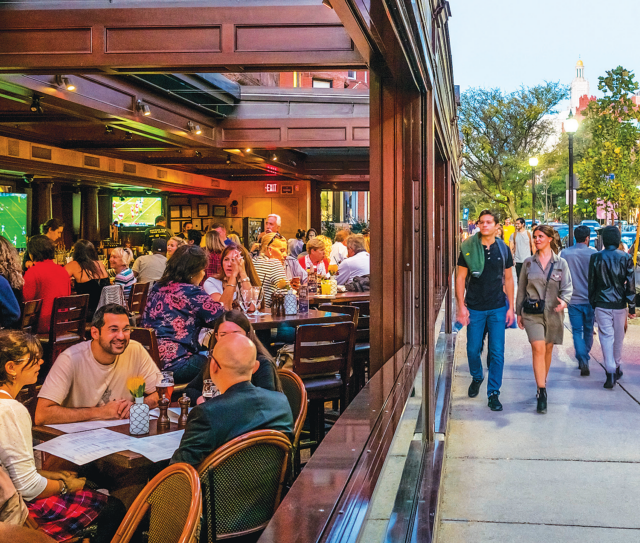
Back Bay retail properties garner the highest rents in Boston, but the departure of Neiman Marcus from Copley Place marks a significant departure for the neighborhood. iStock photo
Homelessness Seen as Challenge
Despite being home to Boston’s highest-rent retail properties and sought-after luxury residences, Back Bay has attracted complaints about declining quality of life in recent years.
Residents say scooters driven by food delivery drivers endanger pedestrians, while retailers such as Lululemon and the Prudential Center mall’s tenants have been frequent targets of shoplifting gangs.
Even the Boston Public Library hasn’t been immune to lawlessness: in 2024, two men were arrested after an ax-wielding visitor was tackled by an assailant armed with a knife inside the main branch in Copley Square.
“We know there are people in the Back Bay that are in serious need of services,” said Carlos Bueno, general manager of the Raffles Boston hotel. “With the homeless challenges we face, we believe we could connect individuals to services.”
In other neighborhoods such as Boston’s Downtown Crossing and downtown Worcester, BID employees such as “street ambassadors” provide cleaning services and provide eyes and ears on the street
Hotels, Restaurants Seek Marketing Support
Under state law, BIDs are authorized to spend their assessments on five areas: district management and staff, maintenance, promotion and marketing, business services and capital improvements.

Steve Adams
Mainzer-Cohen said the Back Bay BID is expected to require an annual budget between $3 million and $3.5 million. Major services would include business advocacy, street cleaning and sweeping, homeless outreach and restoration of holiday lighting and summer beautification programs.
Beyond BXP, smaller property owners have been among the most reluctant to support the BID, Mainzer-Cohen said. The proposal is expected to exempt properties below an assessed threshold of approximately $4 million.
Back Bay hoteliers including Raffles Boston see value in creation of BID-sponsored marketing programs to promote their properties and neighborhood events, Bueno said. The hospitality industry also has felt the effects in recent years from partial shutdowns for maintenance projects at the Hynes Convention Center, he said.
“We are all feeling it: the hotels, the restaurants, all of the other venues. We need a strong Hynes Convention Center to really drive more occupancy and more compression into the Back Bay,” said Bueno, who is chair of the Back Bay Association.