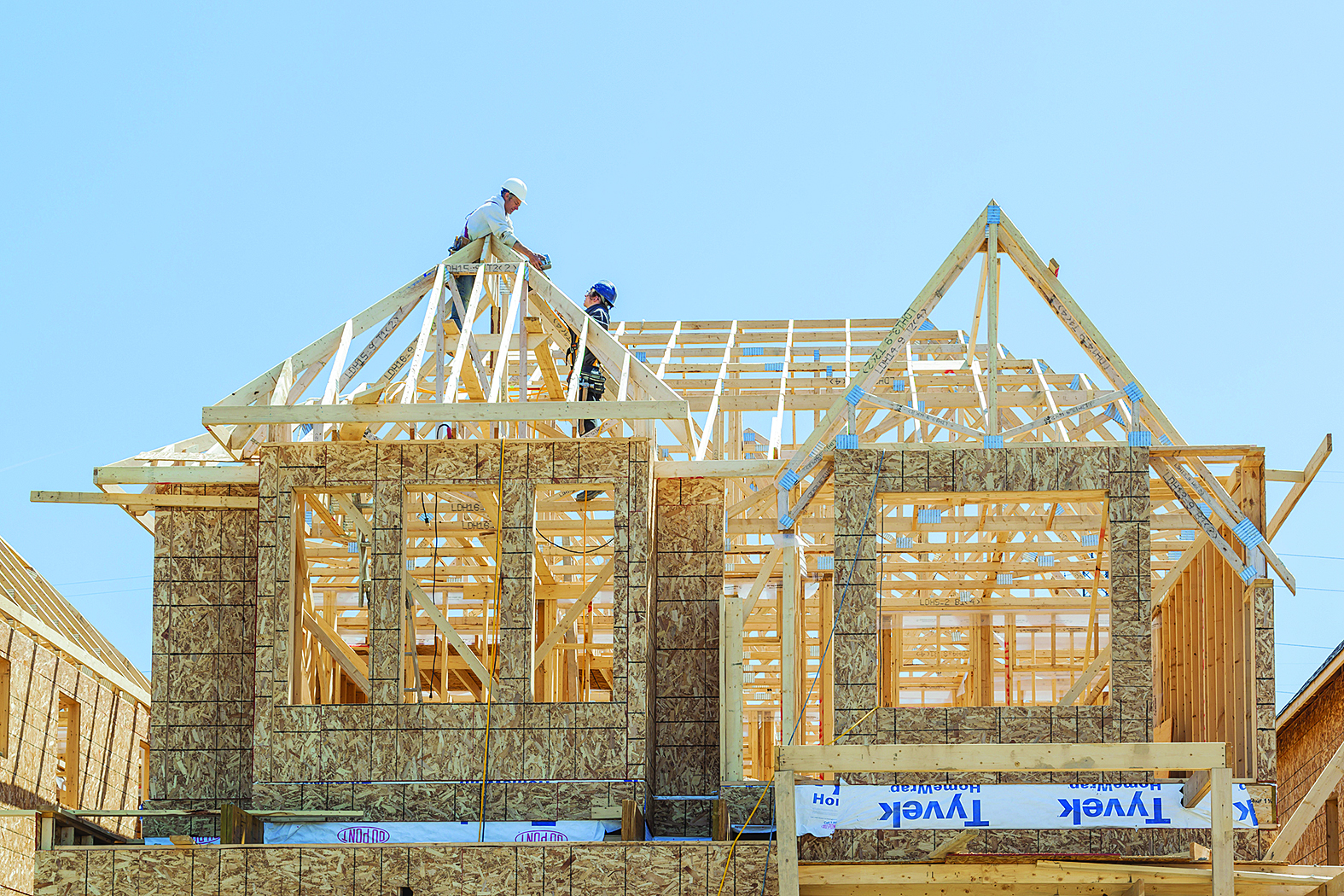
The same “unmanageable complexity” in local regulations that keeps more ADUs from being built also keeps more single-family homes from going up on smaller lots statewide. iStock photo
Just when you think home prices in Greater Boston can’t get any more outrageous, they do.
Take Natick, long a blue-collar town where young families could still find something affordable.
No more. The median sale price of a home in Natick now tops $1 million, per The Warren Group, something that would have been unthinkable a decade ago.
We got here by not building enough housing. Construction of new single-family homes has bumped along at anemic levels for years now.
Enter granny flats, which were the focus of a new report out last week by Boston Indicators – the research arm of The Boston Foundation – and supported by Abundant Housing Massachusetts.
Slashing Red Tape Can Open Doors
Gov. Maura Healey’s 2024 Affordable Homes Act legislation legalized these relatively modest attached and detached additions to residential properties, meaning they can be built by-right, without having to go through the onerous process of getting a zoning variance.
Healey and her housing team trumpeted the more than 1,200 ADUs permitted in the first year of legalization as progress, but two things stand out as you read the Boston Indicators report.
First, that’s a disappointing number compared to the demand for these units. Second, it’s a drop in the bucket compared to Massachusetts’ larger housing needs.
Simply building ADUs and in-law apartments won’t by themselves solve the housing affordability crisis, which seems to get worse by the day in Greater Boston.
But sometimes small changes can pave the way for a solution to a big, overwhelming problem, such as the cycle of anemic residential construction and rising prices we are stuck in right now.
ADU Builders Face Tough Landscape
Currently, builders have their work cut out for them.
The Boston Indicators report notes that, in the year since the state legalized ADUs, the number of new backyard cottages and in-law apartments approved has lagged projections.
It’s not that families and builders aren’t out there pushing plans for new units, having submitted building permit applications for 1,600 new ADUs.
However, here’s the rub: Cities and towns gave a green light to just 1,200 of those new units, according to Boston Indicators.
That is more than what got built before state lawmakers in legalized by-right construction of ADUs across the state. But it is still well below the 1,600 to 2,000 new units a year that state housing officials had hoped for.
The culprit – surprise, surprise – remains local red tape and regulations that continue to put a damper on plans for new granny flats, as Banker & Tradesman’s Steve Adams reports elsewhere in this issue. Desperately needed: Statewide standards for the design of ADU and for building, fire code, septic and stormwater rules, the report argues.
As it stands now, different towns are taking different approaches, the report notes, citing “the fragmented complexity” of the way Massachusetts regulates building, where each town is allowed to make up its own definitions for a host of important characteristics.
Here’s more: “The shortfall does not reflect a lack of interest from homeowners or renters. High construction costs and limited financing options are real challenges—that are compounded by a regulatory system that adds unnecessary costs, delays, and uncertainty to ADU projects.”

Scott Van Voorhis
Homebuilders Face the Same Problems
Yet here’s the thing: Single-family home builders often run into the same issues, especially when building infill homes on smaller lots. So, taking down barriers and bureaucratic obstacles that hold up ADUs and in-law apartments may very well end up boosting new house construction as well.
For example, the ADU law, while legalizing by-right development of granny flats, also allowed cities and towns to retain a fair degree of latitude in terms of applying “unique dimensional standards” to new units.
Instead, the report calls on state lawmakers to rein in this freelancing on the local level that has unfortunately created “unmanageable complexity,” while “pulling back local authority to proliferate rules that apply to ADUs.”
And the report calls for the creation of regional ADU permitting authorities, which, if they were to prove their worth, could potentially provide a big boost to single-family home construction as well.
That could help speed up the permitting and review of new housing plans, taking it out of the hands of local officials who, in the case of more than few communities, may not have sufficient staff or resources to move proposals along in a timely manner.
“Many municipalities lack the staff and technical expertise to run the project reviews, especially if permitting activity were to pick up,” the report notes.
If adopted, these measures would certainly speed up the permitting of new granny flats.
But it could also provide both the roadmap and the rulebook for a revival of single-family home construction as well.
Scott Van Voorhis is Banker & Tradesman’s columnist and publisher of the Contrarian Boston newsletter; opinions expressed are his own. He may be reached at sbvanvoorhis@hotmail.com.