




When Bad Housing Policy Turns Deadly
A handful of Greater Boston communities have become ground zero for the coronavirus pandemic in Massachusetts, thanks in part to the overcrowded conditions forced by too-high rent and too few rental units.
A handful of Greater Boston communities have become ground zero for the coronavirus pandemic in Massachusetts, thanks in part to the overcrowded conditions forced by too-high rent and too few rental units.

As Super Tuesday and the Massachusetts Democratic presidential primary looms in his campaign’s windshield, candidate Vermont Sen. Bernie Sanders took to twitter to say he “stands with” community groups seeking to halt plans to redevelop Suffolk Downs.

A civil rights complaint filed Monday accuses the Boston Planning & Development Agency of violating federal law by failing to ensure non-English speakers can participate in discussions about the future of the city’s biggest development site in a generation.

With potential for massive property damage in Boston neighborhoods in the path of rising seas, the city is studying funding mechanisms to pick up the multi-billion-dollar tab in coming decades.

Flooding isn’t the only threat Boston faces thanks to climate change: Extreme summer heat is in the forecast as the 21st century grinds on. In response, the Urban Land Institute is proposing a series of interventions to help area cities and developments cope.
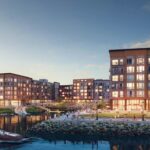
Resilient designs and skyline views are attracting the first wave of residents to the 478-unit Clippership Wharf condominium and apartment complex in East Boston.
Climate Ready Boston projects that by the year 2070 the temperature may reach 90 degrees Fahrenheit almost every day of the summer in eastern Massachusetts. The buildings and systems that we have created over the past 100 years were not designed to deal with such conditions.
The MBTA’s decision to invite developers to bid on easements for a 1.15-mile former railroad right-of-way raises serious concerns about the authority’s strategic thinking.

Live racing came to an end at Suffolk Downs on Sunday, with the historic track that straddles the East Boston-Revere line hosting some 21,000 guests for its final weekend in operation after nearly 85 years.

Rather than walling off the site in the face of climate change risks, waterfront developers should consider how the neighborhood and residents alike can interact with the waterfront, and how the site fits in with the broader neighborhood.

From Boston City Councilor Lydia Edwards’ perspective, the worst outcome for the redevelopment of the 161-acre Suffolk Downs property would be a finished product that resembles the Seaport District.
The billionaire investor behind the Suffolk Downs racetrack redevelopment is a fourth-generation Texas oilman who inherited the family fortune at age 17 after his father died in a tractor accident on his Houston area ranch.
Instead of treating the project as pipe dream expansion of the current system, MassDOT needs help from the business community to see the Red-Blue Connector for what it is: a relatively cheap way to reduce congestion from Kendall Square to Logan Airport, and boost the North Shore’s economic prospects at the same time.

As resiliency and mobility issues approach crisis proportions in Greater Boston, Amy Korte is using technology to optimize designs and operations of new developments. Korte was named president of Arrowstreet, the Boston-based architecture firm that she joined in 2008, in May.
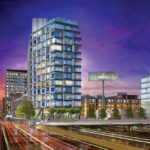
While the Boston market holds interest for co-living project operators, the city presents challenges from a regulatory perspective. Boston’s zoning code is complicated, with many neighborhoods, in effect, having their own zoning ordinances.

The Boston Planning & Development Agency Board of Directors approved development projects in neighborhoods across the city of Boston Thursday which will create an additional 73 residential units, including 10 income-restricted units.

HYM Investment Group’s preferred alternative for redeveloping the 161-acre Suffolk Downs racetrack property calls for 10,000 housing units and 5.2 million square feet of commercial space, while reducing building heights near the Orient Heights section of East Boston.

With the highways and public transit options around Boston perpetually congested, a new study funded in part by the state details potential new ferry routes to connect downtown Boston with East Boston and the Seaport, Columbia Point and Squantum Point in Quincy.

Traditionally a lower-priced spillover market when Boston hotel rooms become scarce, the city of Revere suddenly is positioned to tap into a growing hospitality market in its own backyard, with a 1,000-room pipeline under construction or seeking approval, more than doubling the city’s existing room inventory.

Separate developments proposed by Rock Development and Transom Real Estate would see nearly 200 units rise on two parcels facing Logan Airport in East Boston.

