
by The Associated Press | Oct 17, 2024
A subway train that derailed near Boston earlier this month had entered a 10 mph zone traveling at 36 mph, according to an initial report from the National Transportation Safety Board released Wednesday.
by State House News Service | Oct 3, 2024
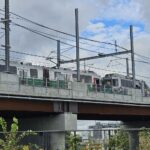
Gov. Maura Healey said the Tuesday afternoon derailment on the Green Line is “not attributable to the rail or the track,” and suggested that federal investigators are instead focusing on other factors including the operator as a potential root cause.

by State House News Service | Sep 19, 2024
Does it seem like your T ride is improving? It actually might be. Statistics show the transit agency is turning a corner on subway slow zones, speeds on the Blue and Orange Lines and the largest workforce in years that resulting in better service.

by State House News Service | Jan 16, 2024
Reports of smoke at the Downtown Crossing station triggered massive disruptions to the MBTA’s core subway system, shutting down more than a dozen stops on a day when the morning commute was already snarled by winter weather.

by State House News Service | Jan 12, 2024
A hiring blitz during Gov. Maura Healey’s first year in office boosted the MBTA’s headcount by more than 10 percent as the agency works to fill gaps its ranks that drove safety, maintenance and reliability problems for years.

by State House News Service | Oct 19, 2023
After being released in an apparent mistake two weeks ago, the MBTA’s transparency-touting podcast pulled out of the station again Wednesday morning, with the general manager saying “we certainly can do better.”

by State House News Service | Oct 12, 2023
The MBTA resumed running trains on the Green Line Extension at full speed on Tuesday following a string of overnight maintenance efforts that involved physically pushing the tracks apart to let trains move faster than a walking pace.
by State House News Service | Sep 29, 2023
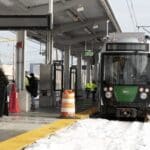
MBTA officials shed little new light Thursday on the “unusual” rail problems that have slowed the nearly brand-new Green Line Extension almost to a halt, while a growing tide of public frustration is taking aim at Gov. Maura Healey and her hand-picked deputies.
by James Sanna | Sep 14, 2023
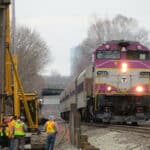
Several MBTA commuter rail lines are getting more rush-hour service as data mounts that commute problems are a leading cause of Boston-area workers reluctance to return to the office full-time.
by Banker & Tradesman | Sep 10, 2023
The MBTA has finally released the results of an external investigation into its employees’ failure to properly inspect subway tracks. But full accountability for the fiasco is still lacking.

by State House News Service | Sep 8, 2023
Poorly trained staff, a breakdown of communication between T leaders and employees, and missing documentation of inspections are among the reasons the MBTA’s tracks have deteriorated to the point where it is not safe for trains to operate at full speeds, according to a new report.
by James Sanna | Aug 2, 2023
The main union representing MBTA workers plans to announce a new contract with the agency Wednesday aimed at taking a bite out of the agency’s employee retention crisis.

by State House News Service | Jul 18, 2023
For Red Line commuters who have suffered through months of slow zones and more than a year of service cuts, an eight-minute trip from Harvard Square to Park Street might sound like a pipedream. But that wasn’t always the case.
by The Associated Press | Jul 13, 2023
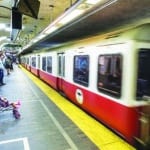
Firefighters had to manually carry water up to an elevated platform to fight a small fire was reported underneath a car on a train at Charles/MGH.
by James Sanna | May 25, 2023
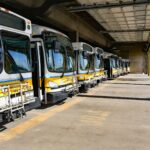
The nearly 300,000 people who ride the MBTA’s buses every day could be getting some relief from the crowding and unreliable schedules caused by the T’s major staffing shortages.

by James Sanna | May 23, 2023
The MBTA now has its first chief communications officer, a former top aide to Sen. Elizabeth Warren and senior leader at the Boston Public Schools.
by State House News Service | Apr 27, 2023
MBTA officials voiced concern about rising pension costs in arbitration hearings more than a year ago, according to a document released Wednesday that a union chief involved in the proceedings said was “out of date” because its provisions never took effect.
by Rick Dimino | Apr 23, 2023
Fixes to the T need to go beyond just new leadership and an increased workforce. We also need to explore new approaches to capital projects, service delivery and funding plans.
by James Sanna | Apr 21, 2023
Following months of calls from transit advocates to replace members of the MBTA board of directors, Gov. Maura Healey announced early Friday morning that she was replacing the board’s chair and two others appointed by former Gov. Charlie Baker.

by State House News Service | Apr 20, 2023
Officials will end service early on several nights in the next month to accelerate necessary repairs, but transit advocates called the plan “untennable” in light of upcoming Sumner Tunnel closures.






