Photo by Steve Adams | Banker & Tradesman Staff
Waltham city councilors voted Monday night to override a mayoral veto and set up a zoning framework to let three office parks redevelop with up to 2,000 new homes, saying the project was vital to the city’s future.
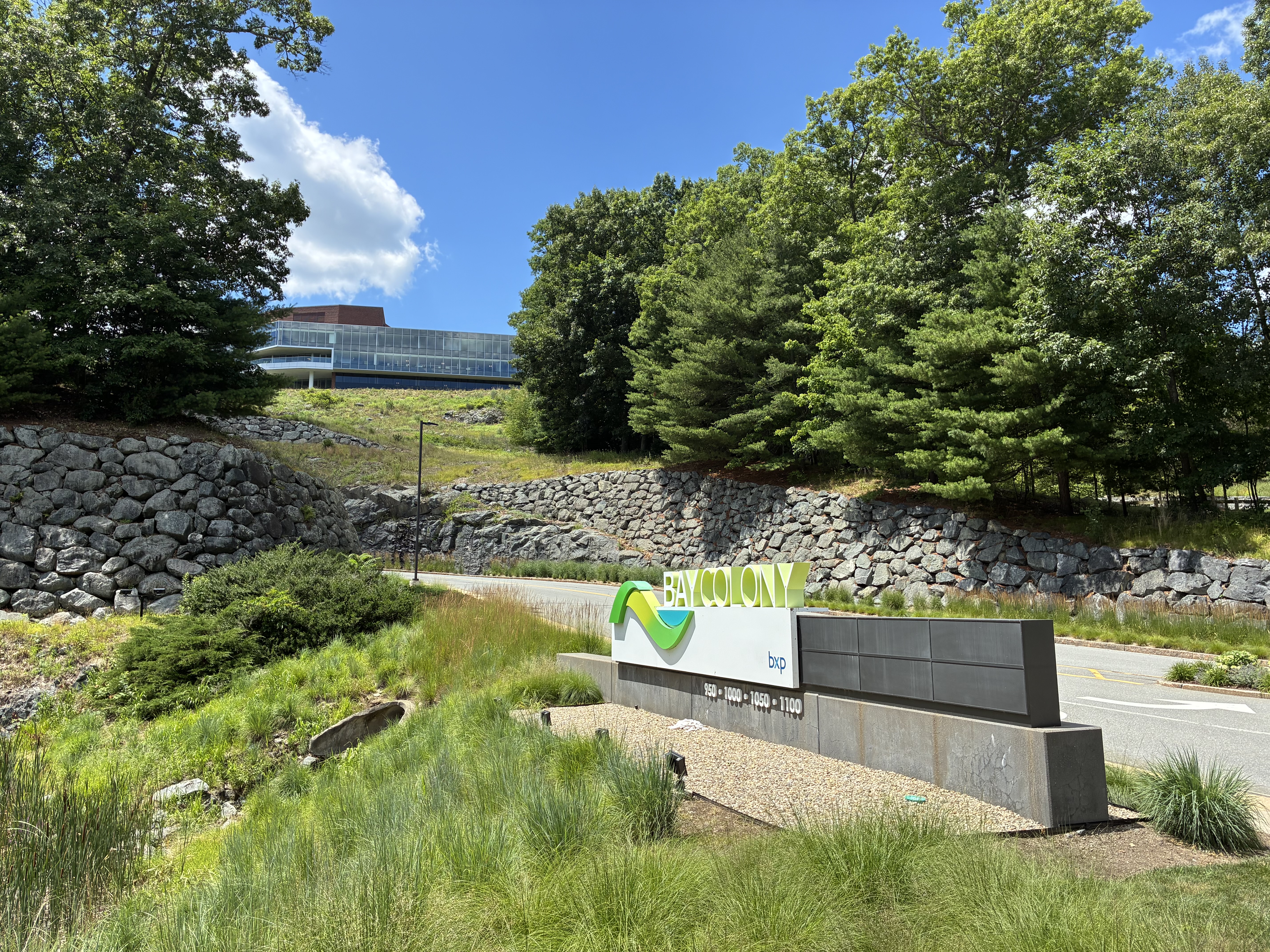
BXP, formerly Boston Properties, had sought city approval to redevelop portions of three of its office parks along Route 128 by adding housing. Office leasing at the Bay Colony Corporate Center and the Waltham Weston Corporate Center had been flagging, and plans for additional commercial space on the former Polaroid campus at its 1265 Main St. mixed-use property never broke ground amid post-pandemic office and biotech market softness.
The company had worked with city officials since February to craft a zoning framework for all three properties that capped new housing units across all three properties at 2,000, around a third of what the properties could conceivably hold. A BXP executive told Waltham residents that 1,500 of those units could rise at the office REIT’s Waltham Weston Corporate Center alongside a proposed commuter rail station.
BXP is in negotiations with the MBTA regarding the station, which would also serve its neighboring, proposed MBTA Communities development in Weston, but the MBTA has refused to release more than a few details to date.
The new zoning would also allow small-scale commercial projects such as office, retail and restaurants, and individual buildings would still need City Council approval via a special permit process.
But Mayor Jeannette McCarthy in July vetoed the council’s unanimous decision to include the Bay Colony Office Park in the rezoning, saying it was too far from transit, lacked sufficient parking and was too close to neighboring homes.
McCarthy did not attend Monday night’s Waltham City Council meeting, where Councilor Cathyann Harris, who oversaw the rezoning process, said a vote to override the mayor was a vote for lower property taxes.
“Waltham is at a crossroads. Bay Colony [Corporate Center] is emblematic of what is happening in the office market. We have significant office vacancies, acres of parking lots built for employees who are no longer coming to these buildings every day. We have declining commercial property values and properties receiving tax abatements because they are empty,” Harris said. “Decline has its consequences. Residential property taxpayers, myself included, saw an increase in taxes because commercial property taxpayers could no longer carry their share.”
The development was needed “to keep Waltham affordable at the tax level,” she said. Other councilors noted that a redevelopment would come with significant new money, including from the state, to build road improvements and add infrastructure like a new fire station to help serve the new housing.
Councilors ultimately voted 12-1 to override McCarthy’s veto of the Bay Colony zoning, and 13-0 to override her veto of the other two parcels.
As office utilization in Boston’s suburbs crashed following the pandemic and demand for life science space collapsed, property owners including BXP have turned to apartment complexes to replace or compliment existing office buildings, particularly in the jobs-dense Route 128 corridor.
Nearly one quarter of the 36 million square feet of office space the Route 128 corridor between Needham and Woburn was vacant or available for sublease as of June 30, according to research by commercial brokerage Colliers.
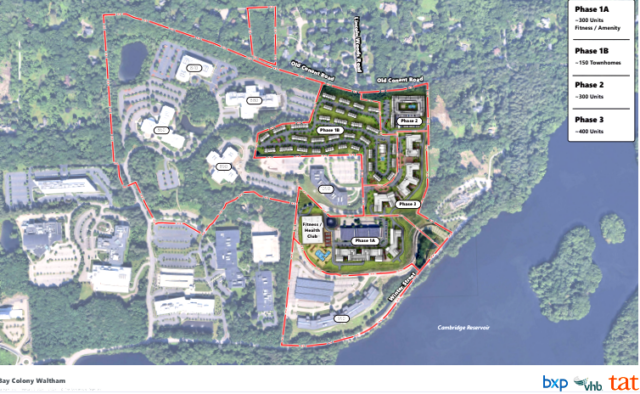
A conceptual master plan for Waltham’s Bay Colony office par. Image by The Architectural Team | Courtesy of BXP