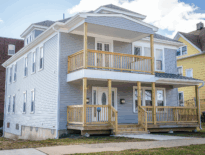
Housing construction across Massachusetts has collapsed. Yet many state and local officials aren’t being realistic about the scale of what’s needed to fix that. iStock photo
Welcome to Massachusetts, the birthplace of the American Revolution and the million-dollar fixer-upper.
Ok, California might actually have us beat on the second count, especially given the loony home prices in Silicon Valley.
Yet the Bay State boasts one of the worst housing crises in the country, with a lot, but certainly not all, of the misery concentrated in Greater Boston.
And affordability, if anything, is headed in the wrong direction, as rents and prices continue to rise amid a decline in new home and apartment construction over the past few years.
Statewide, we’ve seen building permits issued for new houses, apartment and condominiums drop by a third, while in Boston overall residential construction is down by even more compared to the start of the decade.
Even more discouraging, the drop in residential construction comes despite some modest zoning reforms in recent years that are starting to hit their stride.
The MBTA Communities Act, which requires cities and towns with or near T stations to open their doors to new apartments and condos, has overpromised and underdelivered, with the experts saying we’ll be lucky to get 40,000 new units over a decade, not the 200,000 some had predicted.
A new law that legalized granny flats has also provided a small boost to housing production. Ditto for the Housing Choice law, which replaced the two-thirds vote required for any zoning changes that would pave the way for new housing with a simple majority.
Blaming Trump, Massaging Housing Stats
I suspect that three of our top elected leaders, Gov. Maura Healey, Lt. Gov. Kim Driscoll and Michelle Wu, mayor of New England’s largest city and economic engine, understand the big picture here.
Yet both the Healey and Wu administrations continue to play the same old game of claiming substantial progress in their respective efforts to boost housing affordability.
Both the governor and the mayor have massaged the housing numbers in a bid to paper over the declines, taking credit for housing units that were permitted or broke ground under their predecessors.
The Boston mayor’s public pronouncements often focus almost solely on public housing and affordable units, while seeming to ignore the collapse of market-rate residential construction in the city.
And if all else fails, there is always Trump to blame.
Wu spent much of her recent mayoral campaign talking about Trump, not housing, while Healey took up the Trump theme in her recent campaign launch speech, blaming the president for “raising costs” and “making everything worse.”
Yet the claims of progress and blame-shifting aren’t fooling anyone, least of all the families and young people struggling to find any place to live, never mind whether it’s affordable, while eyeing the exits.
If you are seriously thinking of moving to Florida or Ohio in hopes you may actually be able to buy your first home, you know exactly how ridiculously unaffordable the Massachusetts housing market is and how little progress has been made in solving this key issue.
Nor has Wu’s rhetoric pulled the wool over the eyes of city residents.
While the mayor rarely talks about the importance of boosting overall housing supply, including market-rate units, in bringing rents and prices down, Bostonians know better.
The vast majority of city residents polled by MassINC in August of last year – 81 percent – agreed with the statement that the city needs to “take action to address Boston’s housing shortage and allow more homes to be built throughout the city.”
Just 22 percent thought the city’s current policies under Wu were doing a good or excellent job of dealing with the housing affordability crisis.
It’s Not Helping Fix Things
Claiming progress where there is none, or inflating small gains into big victories, is a common fault of politicians, with Healey and Wu hardly unique.
However, for people on the front lines of a major problem like the housing crisis, such talk is hardly reassuring.
It conflicts with their everyday reality and signals that elected leaders are either out of touch with what is actually happening, or are engaging in insincere happy talk.

Scott Van Voorhis
Maybe it’s time for our state’s leading elected officials to try something completely different – namely, radical honesty.
That would mean admitting that we are losing the battle to rein in runaway home prices and rents.
It would also involve honesty about what it will truly take to turn things around, such as far more sweeping zoning reforms that will shift some power away from local officials and residents.
Acknowledge that such a course of action would be politically hazardous, angering some homeowners and local officials, but absolutely vital to put a dent in home prices and rents.
And last but not least, cite some of the big challenges Massachusetts has faced and overcome in the past.
Then call for the public’s support, say a prayer, and hope for the best.
Scott Van Voorhis is Banker & Tradesman’s columnist and publisher of the Contrarian Boston newsletter; opinions expressed are his own. He may be reached at sbvanvoorhis@hotmail.com.