by State House News Service | Apr 18, 2025
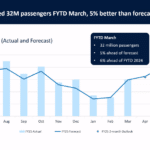
Buoyed by busy air travel at Logan Airport, the Massachusetts Port Authority is expecting a “very good fiscal year” while bracing for potential turbulence in connection with tariff impacts on travel and cargo patterns, CEO Rich Davey said Thursday.
by Banker & Tradesman | Feb 23, 2025
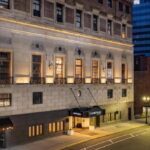
Boston’s hotel market offers a rare commodity in today’s CRE environment: predictable growth in a world of unpredictability.

by Banker & Tradesman | Feb 23, 2025
Boston’s strong and well-balanced economy has been key to the recovery of Boston’s hotel industry post-COVID, garnering strong interest from the investment community.
by Banker & Tradesman | May 26, 2024
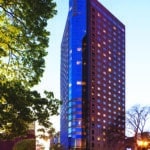
Our outlook remains optimistic for the Boston market, fueled by group and convention travel, as well as an increase in global tourism and the absence of any significant new hotel developments.

by Banker & Tradesman | May 26, 2024
Boston hotel operators are benefiting from the recovery of group demand, driving reservations connected to events at the Boston Convention & Exhibition Center.

by State House News Service | May 20, 2024
Nearly 3.6 million passengers traveled through Logan Airport in April. That’s 9 percent more than was forecasted. And on a year-to-year basis, air travel is up 5 percent over what was expected

by State House News Service | Apr 18, 2024
A recent survey of banking and business contacts around New England found tourism to be a bright spot in the regional economy, one with a “very bullish” outlook for the remainder of 2024.

by Steve Adams | Dec 25, 2022
After continuing to ascend driven by life science industry momentum through the early stages of the COVID era, Greater Boston’s commercial real estate industry felt the gravitational pull of financial markets’ tighter lending standards and industry layoffs in 2022.
by Steve Adams | Dec 18, 2022
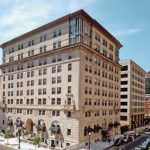
Shuttered hotels and skeleton-crew staffs are fading into distant memory as the Boston lodging market approaches a full financial recovery from the depths of their pandemic plunge.
by State House News Service | Sep 27, 2022
After two years when its gathering halls were nearly empty of traditional big events, save for COVID vaccination clinics, Massachusetts Convention Center Authority officials have declared that they just completed their most successful financial year in history.
by Steve Adams | May 29, 2022
For four generations, Saunders Hotel Group has owned and operated properties that are on the short list of travelers visiting Boston. It gives Chairman Gary Saunders a useful position to gauge the future of Back Bay hotel market.

by Banker & Tradesman | May 29, 2022
The Boston and Cambridge lodging market has been slower to recover than most markets across the country. However, after more than two years since the pandemic began, the market is beginning to pick up speed.
by Banker & Tradesman | May 29, 2022
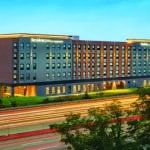
Boston was amongst the hardest hit regions during the pandemic. And the slow return of corporate, group and international travel has lengthened area hotels’ road to recovery.

by Steve Adams | Feb 6, 2022
Martha Sheridan, CEO of Greater Boston’s Convention and Visitors Bureau, has a new source of funding at her disposal to shore up the battered hospitality industry as 2022 opens with uncertainty.

by Scott Van Voorhis | Dec 19, 2021
We are two years into a once-in-a-century pandemic that has altered how we work, live, travel, socialize, do business – even what we ultimately value in life.

by State House News Service | Sep 24, 2021
Buoyed by a passenger surge in July, Massachusetts Port Authority officials are optimistic that the return of air travel through Logan International Airport is outpacing their earlier projections even as the Delta variant portends a forthcoming slowdown.
by Banker & Tradesman | Jul 25, 2021
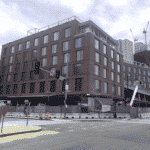
While the course of Boston’s hotel industry turned dramatically, Boston’s longstanding demand generators, industry growth and pent-up travel demand will help the city’s upcoming recovery efforts.
by State House News Service | Jul 16, 2021
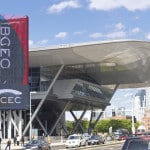
Convention business in Massachusetts is “starting to escalate quite dramatically,” a trend that could lift tourism and hospitality sectors ravaged during the pandemic, officials said Thursday.

by Steve Adams | Jul 1, 2021
Boston hotels are suffering from the second-worst financial performance in the nation as the urban hospitality market continues to feel the lingering effects of COVID-19 travel downturns.

by Steve Adams | Jun 2, 2021
Boston’s Ritz-Carlton hotel reopens on Thursday with new promotional packages designed to capture the all-important leisure travel market.






