
by Steve Adams | Aug 18, 2024
As Boston’s economy adapts to the post-pandemic working and living environment, Jim Rooney has been an outspoken critic of threats to the region’s economic competitiveness, from problems with the T to office vacancies.
by State House News Service | Aug 8, 2024
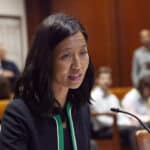
Senators be aware: If you get a call from a 617 phone number in the coming days, it could be Boston Mayor Michelle Wu.

by State House News Service | Aug 7, 2024
Senate President Karen Spilka reacted sharply after Boston Mayor Michelle Wu suggested Boston homeowners would have the Senate to blame if state lawmakers don’t pass her proposal to temporarily hike the city’s commercial property tax rate.
by State House News Service | Jul 10, 2024
After meeting with Boston’s delegation of state legislators Monday, Mayor Michelle Wu said she’s holding out hope that her plan to shift the city’s property tax burden to avoid a residential tax hike could pass through the State House before a quickly approaching deadline.

by Steve Adams | Jul 1, 2024
Today’s start of the new fiscal year brings a planning department formally under city control to Boston City Hall for the first time in 70 years.
by State House News Service | May 31, 2024
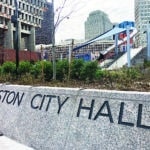
With the window for the necessary state legislative action quickly closing, Boston city councilors still have many questions about a proposed tax-shift plan that has drawn the ire of some influential real estate industry leaders.
by Steve Adams | May 22, 2024
Business leaders warned Wednesday morning that increases to Boston’s commercial property tax rate would further diminish downtown as an economic center and drive businesses to Cambridge and suburban communities.

by Steve Adams | May 21, 2024
A temporary shift in Boston’s tax structure would hike commercial properties’ tax bills by 17 percent in fiscal 2025 while reducing their cumulative value by $2.6 billion, according to an analysis of future real estate conditions.

by Steve Adams | May 19, 2024
Boston Mayor Michelle Wu’s administration is trying to cut through the murky process that forces real estate projects to shell out millions in unpredictable community benefits payments.

by Scott Van Voorhis | Apr 28, 2024
With all due respect a bunch of academics, however distinguished, need to hear from developers in the trenches to get to the bottom of why Boston’s suffering a plunge in housing starts.

by Steve Adams | Apr 19, 2024
The Boston Planning & Development Agency ordered developer MP Boston to open the centerpiece public amenity of its $1.3 billion Winthrop Center skyscraper on weekends to comply with an agreement with the city.
by James Sanna | Apr 12, 2024
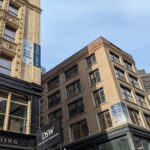
Speaking to the Boston Municipal Research Bureau’s annual meeting Thursday, Boston Mayor Michelle Wu said her plans to increase troubled office towers’ share of the city’s tax burden were vital to “avoid making our housing crisis worse.”
by CommonWealth Beacon | Apr 11, 2024
Only days after announcing a plan to seek state approval to raise property tax rates on commercial property owners, Boston Mayor Michelle Wu filed a $4.6 billion budget plan for 2025 that would hike city spending by 8 percent, or $344 million.
by Steve Adams | Mar 15, 2024
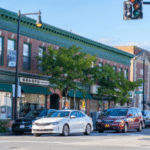
Boston Planning & Development Agency directors gave cautious support for Mayor Michelle Wu’s rezoning plan designed to encourage mid-rise housing construction near transit stops in 18 neighborhoods.

by Scott Van Voorhis | Mar 3, 2024
Don’t like the Boston Planning & Development Agency? Think it’s too close to developers and business interests and should be abolished? Just amp up the fractious Boston City Council’s influence on what gets built.
by James Sanna | Jan 30, 2024
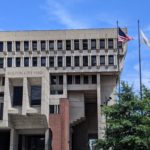
Boston Mayor Michelle Wu took another step forward in her plan to bring the city’s planning and development arm more firmly under the control of elected officials.

by Steve Adams | Jan 10, 2024
The city of Boston won’t offer incentives for housing developers unable to obtain financing for approved projects, although it may reconsider the issue if interest rates drop later this year.
by James Sanna | Jan 10, 2024
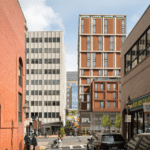
Boston Mayor Michelle Wu has pledged to dramatically grow the city’s stock of public housing units. But the effort will hinge on public officials and private developers collaborating quickly this year.
by Steve Adams | Nov 13, 2023
Boston won’t pursue a ban on fossil fuel-burning building systems in new developments, a key element of Mayor Michelle Wu’s environmental sustainability platform.
by Steve Adams | Nov 3, 2023
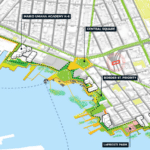
A flood barrier designed to protect waterfront properties including a K-8 school and shopping center is the first stage of a planned East Boston resiliency project.






