




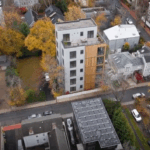
Upzoning Starts to Deliver Windfalls in Cambridge
As the Cambridge City Council debates additional upzoning to encourage multifamily development, recent real estate transactions illustrate the dramatic increases in developer interest.
As the Cambridge City Council debates additional upzoning to encourage multifamily development, recent real estate transactions illustrate the dramatic increases in developer interest.

The suit, filed by the Pioneer New England Legal Foundation, challenges a city law requiring any project of 10 units or more to permanently set aside 20 percent of it as affordable housing.

Politics and real estate have long been intertwined, but seldom as directly as in the choices that voters face in the ballot box next month. And housing advocates are hoping to score some wins.

Since Cambridge took a bold step to allow 4- and 6-story multifamily housing across the city, there’s been strong interest in new projects. But overlooked regulations threaten to undermine new housing.

Cambridge City Councilors are set to back a landmark change eliminating single-family zoning to boost housing production across the city after a preliminary vote yesterday.

Affordable developers have been treading carefully despite theoretical zoning permission to build tall, including shrinking buildings to placate neighbors.

A vision to turn West Cambridge into a second Kendall Square is coming apart amid record lab vacancies across the region, as the fundamentals of development look set to shift back in favor of multifamily housing.

The life sciences and lab market across the Boston metro area has been in a state of flux for some time, but a new factors have added extra pressure on landlords and owners.

The MBTA owns prime locations for real estate development but efforts to build on them have a history of lengthy delays and missed opportunities. Could that be changing?

The biggest dining debate in Boston’s North End is over the state of outdoor dining – something that’s having a much more upbeat rollout elsewhere in Massachusetts this season.
The city sought to remove barriers to affordable housing construction by cutting permitting times and costs. And while funding shortfalls will hurt its full potential, it already appears to be working.
Beneath a facade of inclusivity and progressivism lies an ugly truth: Cambridge is not open to everyone. But the City Council should not settle for a surface-level fix.

Is it time to put aside the old schtick about the “People’s Republic” of Cambridge? The city has been an outlier among its inner-core peers in not pursuing rent control last year. The reasons for that are rooted in history.

Backers of a multifamily rezoning effort were thoroughly routed in Newton last night’s local elections, while a slate of councilors who backed one of the biggest housing-focused upzonings in recent Cambridge history cruised to victory.

Educational institutions and private developers are expected to be among the bidders on the Matignon High School property in Cambridge.

On top of the grant, the bank will also provide mentorship to minority entrepreneurs, as well as small businesses underwriting training for the Cambridge Equity Fund task force.

Chase Bank’s massive, five-year branch expansion campaign reached a crescendo yesterday in Harvard Square when it opened its 400th branch since the project was announced in 2018.

It would be hard to say that Cambridge isn’t doing its level best to back up its beliefs in social justice with cold, hard cash.
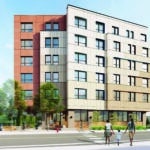
A group of Cambridge city councilors wants to build on the success of the city’s affordable housing zoning overlay by giving affordable developments big density bonuses in Cambridge’s busiest squares and corridors.

As more Greater Boston communities adopt the state’s new opt-in energy code with its higher sustainability standards, developers are testing the limits of how far commercial buildings can effectively run without fossil fuel sources.

