




Legalizing Starter Homes Is Not Radical. It’s Overdue
A question likely headed for the ballot this fall will speak volumes about who our housing system is designed to accommodate – and who it leaves behind.
A question likely headed for the ballot this fall will speak volumes about who our housing system is designed to accommodate – and who it leaves behind.
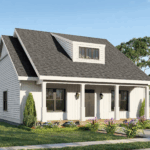
A golf course redevelopment in Stow and a high-profile project in Amesbury are lining up to be test cases for a new style of housing that uses less land and costs less.

Voters are boiling over with frustration as costs escalate in almost every segment of their lives. Will they go for rent control, or new construction as the solution to housing costs?

Under Clark Ziegler, the Massachusetts Housing Partnership has become an important financial partner for housing developers and first-time homebuyers. Now, after 35 years he’s handing over the reins.

As prices continue to rise, starter homes are more in demand across the nation, including in Greater Boston.
A proposed 2026 ballot initiative could seed housing production by making it easier to build more affordable single-family starter homes in Massachusetts.

Two ballot questions that could have big impacts on Massachusetts real estate vaulted their first hurdle to making it into the 2026 state election.

The next big thing in housing affordability isn’t coming from Gov. Maura Healey or a leading legislator. Instead, a housing scholar is taking matters into his own hands.

One set of housing advocates wants voters to repeal the statewide ban on local rent control laws. Another wants to lift yet another big barrier to building moderately-priced homes.
Massachusetts’ 40Y “starter home statute” offers towns and cities a high-impact tool to create reasonably priced homes for young and old, alike.

The legislation aims at homes with at least three bedrooms no bigger than 1,850 square feet – in a bid to make homeownership more affordable.

Too narrow a focus? That’s the big question about the Healey administration’s efforts to tackle the housing crisis to date, which have been skewed towards apartment projects.

The income required to afford a starter home across the nation has risen significantly since 2019.

While starter homes across the nation are getting more affordable, the same can not be said for those in Greater Boston.

Even as record-high high home prices dominate local housing markets across the country, new data suggests that sales of cheaper starter homes are on the rise.

National housing inventory rose 3.3 percent year-over-year, driven almost entirely by a 13.3 percent increase in premium homes. However, starter home inventory plummeted, hitting its lowest level in at least six years, and amid a 9.6 percent year-over-year increase in median list price.

