




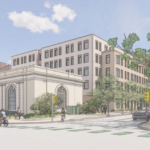
Beacon Communities Revives Development in West Newton
Redevelopment of the former Santander Bank property in West Newton is back in play with submission of a $63 million proposal by Beacon Communities.
Redevelopment of the former Santander Bank property in West Newton is back in play with submission of a $63 million proposal by Beacon Communities.

An Allston co-living project that’s 97 percent leased just 10 months after tenants started moving into its shared living spaces obtained $58 million in permanent financing.
Boston’s newest co-living complex opened in January in Allston. And a prominent developer has figured out how to make it work. But city officials have put a pause on more housing developments like this.

Allston is a microcosm of Boston’s housing affordability dilemma, as developers target virtually every buildable parcel. But locals say the city isn’t approving the kinds of family-friendly units that would help stabilize the community.
Earlier this month, the Boston Zoning Board of Appeals rejected a project that would have brought a sustainable, affordable multifamily building to a transit-heavy site in the Roslindale neighborhood. The reason? The project did not include on-site parking.

Local developers of innovative housing insist the coliving trend – where renters share spaces such as kitchens, bathrooms, common areas and other amenities in exchange for lower rent prices – has not succumbed to the risks of COVID-19, despite reports of its demise.
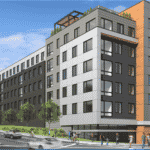
Co-living specialist Common said it’s planning to rely on virtual tours and online leasing in the coming weeks in response to the coronavirus pandemic.
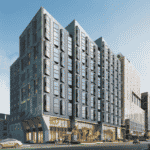
A 278-bed co-living development in Allston and 451-unit private student housing complex in the Fenway moved a step closer to groundbreaking.

An advisory group is supporting developers’ plans for a co-living complex at 525 Lincoln St. in Allston, including a 20 percent affordability component and ban on undergraduate residents and short-term rentals.
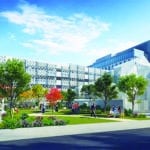
The success of Boston Landing – which leased brand-new lab space to Roche Diagnostics, incubator SmartLabs and Proteostasis Therapeutics in 2017 – put Allston on the map as a budding life science cluster. Now, life science developers have begun to outbid multifamily competitors for development sites.

In a city with a chronic shortage of college dorms and a housing affordability crisis, private for-profit developers are preparing to fill the void.

Living with roommates is nothing new in Allston, but now a development team is moving forward with a large-scale project specifically designed to accommodate group housing arrangements.

