





Boston Climate Strategy Reflects Urgent Timeline for Projects
The city of Boston’s new climate plan says it will stay the course on green building requirements, but it will be several years before construction starts on coastal flooding defenses.
The city of Boston’s new climate plan says it will stay the course on green building requirements, but it will be several years before construction starts on coastal flooding defenses.

Boston officials gave owners of large buildings a three-month extension to report their plans to comply with the city’s BERDO emissions law.

The Wu administration is focusing on how to wean Boston’s vast inventory of aging apartments off fossil fuels. But with electricity costs sky-high, landlord groups are wary.
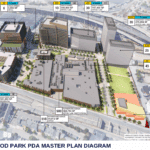
Owners of Charlestown’s 20-acre Hood Park are ready to take the next step in its transformation with plans for a 160-room hotel and 90-unit residential building.

The New England Aquarium became the first property in Boston to receive a higher emissions limit in complying with a new building emissions ordinance, after executives described the energy-hungry requirements of its Central Wharf facility and potential decarbonization costs.
The costs of meeting the state’s energy policies are showing up as a stealth tax in the form of higher housing ownership costs and higher rents. A lot of that has to do with town and city policy.

The city will also launch its first-ever anti-displacement program, Mayor Michelle Wu said during her annual State of the City address.
Commercial building owners in Newton will be required to reduce fossil fuel use that contributes to greenhouse gas emissions or submit payments to the city.

The $500 million energy storage project proposed in the first phase of The Davis Cos. redevelopment of Everett’s former Exxon Mobil fuel tank farm received a key state approval.
There is a clear opportunity to embrace sustainability strategies while reconfiguring Boston’s building stock for a more sustainable future.

The oldest mill in the city of Lawrence was converted into multifamily housing including decarbonized building systems in a $39.2 million adaptive reuse project by WinnCompanies of Boston.
In a surprise vote Wednesday night, Boston’s Zoning Commission rejected the Wu administration’s attempt to limit carbon emissions in new developments.

As commercial landlords swap out fossil fuel-burning systems for electricity, 24 Crescent St. in Waltham is the first office building to tap into Eversource’s clean energy retrofits program to offset the costs.

Callahan Construction Managers has kept busy at a wide range of notable local development projects, but under Patrick Callahan’s leadership it’s expanded its reach from New Jersey to Maine as the larger commercial real estate industry suffers.

New developments in Boston will be required to comply with strict new limits on carbon emissions under a zoning amendment that won support from the Boston Planning & Development Agency’s directors.

After imposing carbon emissions-cutting requirements on existing commercial buildings, the city of Boston is planning to add zoning regulations applying to new construction starting in January 2026.

Healey will discuss “governing in the age of climate change” and Wu will talk about “governance, health and energy.”

Brian Swett is returning to Boston City Hall after a nine-year stint in the private sector to lead the city’s climate change and decarbonization policies.

Two executives are joining Boston-based Suffolk’s new sustainability group which is focusing on green building projects.

Decarbonization of a 75-year-old Kendall Square power plant passed a milestone this week with delivery of an electric boiler that will replace gas-fired turbines to heat buildings in Boston and Cambridge.

