by Banker & Tradesman | Nov 19, 2023
Other states’ experiences show increasing the production of ADUs requires the passage of statewide legislation, but that policymakers must pick between producing more units and producing less controversy.

by State House News Service | Nov 14, 2023
With two days left before lawmakers depart for a seven-week break and shelter-seeking families now being placed on a waitlist, House and Senate Democrats disagree on how prescriptive their crisis response should be.

by State House News Service | Nov 8, 2023
With the state’s emergency shelters on the verge of hitting a new capacity limit, House Democrats on Tuesday unveiled a new plan to create an “overflow” option that would support families for whom space is not immediately available.

by James Sanna | Nov 8, 2023
Backers of a multifamily rezoning effort were thoroughly routed in Newton last night’s local elections, while a slate of councilors who backed one of the biggest housing-focused upzonings in recent Cambridge history cruised to victory.

by Scott Van Voorhis | Nov 5, 2023
Million-dollar home sales just aren’t what they used to be in Greater Boston. And that’s a major problem for Gov. Maura Healey as she forges ahead with her proposal for a local-option tax on expensive home sales.

by State House News Service | Oct 30, 2023
The Healey administration’s new effort to help families move out of the state’s nearly-full shelter system follows a civil rights lawsuit over the governor’s plans to deal with an unprecedented influx of homeless migrants.

by James Sanna | Oct 26, 2023
Aspiring homebuyers struggling to land a new home – let alone their dream home – and real estate agents and brokers hurting for clients could start to get some relief next year, according to a top housing economist.
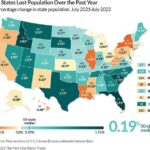
by State House News Service | Oct 24, 2023
One expert said the data “just jumps off the page how much housing has to be a central driver of the domestic outmigration we’re seeing.”
by Banker & Tradesman | Oct 22, 2023
Gov. Maura Healey’s new housing bill is full of promise. But even if she’s able to get it through the legislature largely intact, Massachusetts can’t afford for this bill to be the only major housing legislation of her first term.

by Scott Van Voorhis | Oct 22, 2023
Healey’s plan takes an important step towards zoning reform and plows $4.1 billion into new housing. But she needs to be willing to call out NIMBY selfishness as it happens and make the case for a healthier society.
by Peter Paul Payack | Oct 22, 2023
Gov. Maura Healey came to her Wednesday press conference prepared. But would you mind staying to lend a hand putting these back in the truck?
by Banker & Tradesman | Oct 22, 2023
Boston and other cities stand at the precipice of significant disruption from the evolving nature of work, climate change and AI. We need to think big and go fast to avoid being left behind.

by Steve Adams | Oct 18, 2023
The plan is designed to generate 40,000 new units statewide, and would legalize accessory dwelling units in single-family zones and state aid for conversions of underutilized office buildings and malls into housing.

by State House News Service | Oct 16, 2023
While it’s right-to-shelter law will remain in place, Massachusetts may not be able to guarantee shelter for immigrant families as soon as the end of this month as the state’s shelter system reaches capacity, Gov. Maura Healey said Monday.
by Banker & Tradesman | Oct 15, 2023
Transfer tax supporters’ ideas have merit, and may be getting traction, but Beacon Hill shouldn’t approve these bills without making sure the extra money will actually be spent on new housing.
by Banker & Tradesman | Sep 17, 2023
The state’s pervasive housing problems need a three-pronged approach that adds more housing subsidies and prioritizes the needs of our most vulnerable neighbors.

by State House News Service | Sep 14, 2023
The Healey administration is considering a menu of housing policies, including creating seasonal designations for communities affected by summer tourism

by State House News Service | Sep 12, 2023
A top House Democrat is calling on Gov. Maura Healey’s administration to overhaul its “chaotic” response to the ongoing arrival of migrant families, and establish a unified command structure.

by State House News Service | Sep 6, 2023
It’s now eight months into Gov. Maura Healey’s administration and the wait continues for major proposals from the Corner Office to address perhaps the governor’s signature issue: housing affordability and production.

by James Sanna | Aug 30, 2023
A new report from a leading housing advocacy group is urging Massachusetts’ leaders not to rest on their laurels and assume a recent big change in state zoning law will fix the state’s housing problems on its own.






