




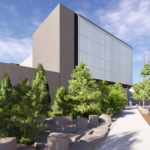
A Green Light for Project Lite Brite?
Massachusetts’ green energy transition means battery storage facility proposals are showing up close to residential neighborhoods, setting up new permitting battlegrounds.
Massachusetts’ green energy transition means battery storage facility proposals are showing up close to residential neighborhoods, setting up new permitting battlegrounds.

A new bipartisan housing law includes financing reforms and zoning incentives that could chip away at some of the many barriers to building in Massachusetts. But its flashiest provision won’t do much.
One parking space can add more than $200 to monthly rent. Bring down the cost of production and more dollars go to housing and fewer to parking.
The requirement to compensate tenants displaced by a condo conversion creates a softer landing for households facing the challenges of an unexpected move.
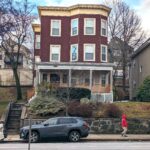
Boston is feeling one of the most pronounced housing crunches in the country. But Mayor Michelle Wu has shied away from setting housing production targets.

With policymakers leaning toward a basket full of revenue-raising options to fund transportation, the Metropolitan Area Planning Council tried to kickstart the debate on Wednesday by analyzing three relatively minor initiatives that combined would raise between $250 million and $400 million a year.

The Boston area’s quasi-public regional planning agency and four cities are splitting a $3 million federal grant that’s intended to lay the groundwork for luring a modular housing factory to the area.
Perceptions that new housing equals a flood of new students aren’t new. What is new is the misinformation about it in debates around MBTA Communities compliance.

MAPC’s latest research has uncovered astounding statistics about the role investors are playing in pushing Boston home prices up. But it falls wide of the mark in recommending rent control as a solution to the problem.
There’s another factor driving local housing-market strain: profit-seeking investors snapping up properties at an increasing rate, according to a new report from established urban planning researchers.

In an update to its landmark 2019 study, researchers at the Metropolitan Area Planning Council say excessive local parking requirements are continuing to drive up housing costs.

The Metropolitan Area Planning Council is calling for the state to require flood history disclosure for potential homebuyers and renters, after the council’s analysis of stormwater flooding in 2010 showed existing tools to predict flooding were unreliable.

The continuing redevelopment of industrial properties in Greater Boston is widening inequity, straining transportation networks and could hurt the region’s future competitiveness, a Metropolitan Area Planning Council report says.
There’s no savior waiting in the wings for Massachusetts’ housing market. Instead, we have to build one ourselves.

A new plan intended to offer a guide for Greater Boston policymakers over the coming years says renter protections and aid for homebuilders both need to be boosted if the state is to become equitable, sustainable and prosperous.
Take a drive through any community in Metro Boston and you’re bound to pass by at least a few retail properties that are past their prime, if not downright shabby. Redeveloping those properties could generate 125,000 new homes region-wide.

Somerville officials are studying new ideas to slow the exodus of arts and cultural spaces from the city amid redevelopment and gentrification. And they think developers can help.
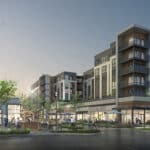
A new MAPC study says outdated and decaying strip malls across Greater Boston have the potential to produce 124,000 new homes if redeveloped.
As the region’s suburbs work to tackle their housing, environmental, economic and racial justice challenges, one of the keys to success may be hiding in plain sight: the humble strip mall. Learn more at an MAPC webinar on Jan. 11.
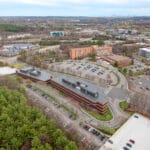
Burlington is blazing a new zoning trail that other suburban towns may be following in coming years, hoping for new housing and better pedestrian connections in the commercial district near the Burlington Mall.

