




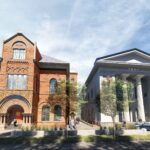
Halls of Justice Fulfill Housing Niche
There’s been no shortage of news about old mills, churches and office buildings being converted into housing across Massachusetts. Now, it’s the turn of old courthouses.
There’s been no shortage of news about old mills, churches and office buildings being converted into housing across Massachusetts. Now, it’s the turn of old courthouses.
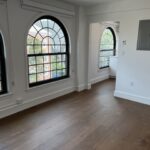
The transformation of 1200 Massachusetts Ave. in Harvard Square blends architectural preservation, modern innovation and a reinvestment in the cultural and residential fabric of Cambridge.
Massachusetts’ Gateway Cities show the scars of minimum parking requirements, with big chunks of downtown cratered by parking lots where new homes could be.

Since Cambridge took a bold step to allow 4- and 6-story multifamily housing across the city, there’s been strong interest in new projects. But overlooked regulations threaten to undermine new housing.

In a market where teardowns command high prices, enclaves of Modernist homes are hanging on in suburban Boston thanks to midcentury homes’ reputations – and a little help from barriers to new development.

A house from Boston’s colonial past could get new life as part of a larger redevelopment proposed for the heart of Fields Corner.
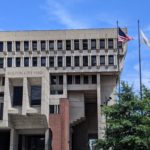
It’s massive, it’s divisive, but no matter what you think of it, it’s undeniably emblematic of a key moment in city history. And now, Boston City Hall has the historic landmark designation to prove it.

The head of a top Boston historic preservation group and major owner of historic properties is headed to City Hall.

A refinancing package will enable Capstone Communities to begin an extensive renovation project at its Station Lofts property in Brockton.

An eight-year renovation project designed by Boston-based Finegold Alexander Architects was named a recipient of the 2024 Preservation Massachusetts Paul & Niki Tsongas Award.
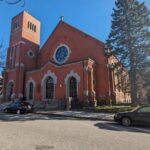
A former church in Fall River will be converted into 46 new market-rate homes thanks to a loan from Rockland Trust.

Changes designed to attract more developers and commercial tenants to downtown Boston and avoid a looming fiscal chasm tied to declining office occupancy are moving closer to the finish line.
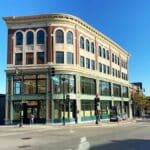
Renovations and rehabilitation of a Classical Revival building at Dorchester’s Uphams Corner received recognition from a pair of preservation groups.
Trying to hold onto Colonial-era charm, many communities have put historic preservation on a collision course with their enormous housing needs. What if there was another way?
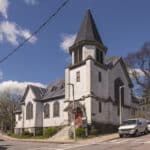
Nonprofit preservation group Historic Boston Inc. has sold a Roxbury church to the Roxbury Action Program for a new headquarters, office space for nonprofits and an incubator.

A former rest area built in 1912 to serve Boston’s expanding streetcar system has new life as Dorchester’s newest purveyor of global cuisine.

The 19th-century Hayden building in Boston’s former Combat Zone was a seedy symbol of urban blight when Historic Boston Inc. purchased it in 1993. Following a multi-year restoration project totaling nearly $6 million, the nonprofit is preparing to sell the 681 Washington St. property, where luxury apartments now rent for up to $4,000 a month.

Decades before “compact living” became a buzzword, an order of priests lived in tiny cells at Brighton’s St. Gabriel’s Monastery. John Sullivan is an executive vice president at CC&F, where he oversees development projects including the 555-unit development that rose in the monastery’s place.

Besides the benefit to the quality and character of these urban centers, these historic preservation and adaptive reuse projects are inherently more sustainable, economic and potentially face less resistance during approvals.
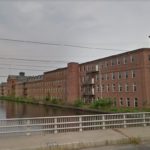
A new state fund outlined in a bill before the state legislature would help facilitate improvements to underutilized commercial or industrial buildings in economically distressed areas.

